
I grew up in two places that did not know much about each other. Washington, D.C. for the school year — in Langdon Park, right off of Rhode Island ave in NE — and Togo for the summer usually between the city of Lomé and the village where our farms are. The flights were long enough that I used to think of it as two separate lives rather than one life with a wide middle.
In D.C. nobody knew where Togo was. I would say West Africa and people would nod at the continent, not the country. In Togo I was the kid from America, which came with its own set of assumptions, most of them about money. Neither place was wrong about me exactly. They were just each holding one half.
The farms sat in the middle of that. My family has grown coffee and cacao on the same land since my great grandfather started it in the early 1900s. When I was there I was on it. When I was in D.C. I was not thinking about it at all. It did not occur to me for a very long time that the two halves could be one business.
What made it a business was a thing we had been throwing away. When coffee is processed, the bean comes out and the fruit around it — the cherry, the berry — goes on the ground. It is agricultural waste by default, at our farm and at most farms. Somewhere around 2017 when I was introduced to Mr Tchala through the U.S. Ambassador the question got asked out loud: what if the part we discard is the part with something in it.
I've written about where that line stops, so I won't relitigate it here. Short version: the coffee berry is ours, start to finish. The shea butter and the aloe are not — those come from suppliers, like everybody else's. I'd rather say that plainly than let "vertically integrated" do work it hasn't earned.
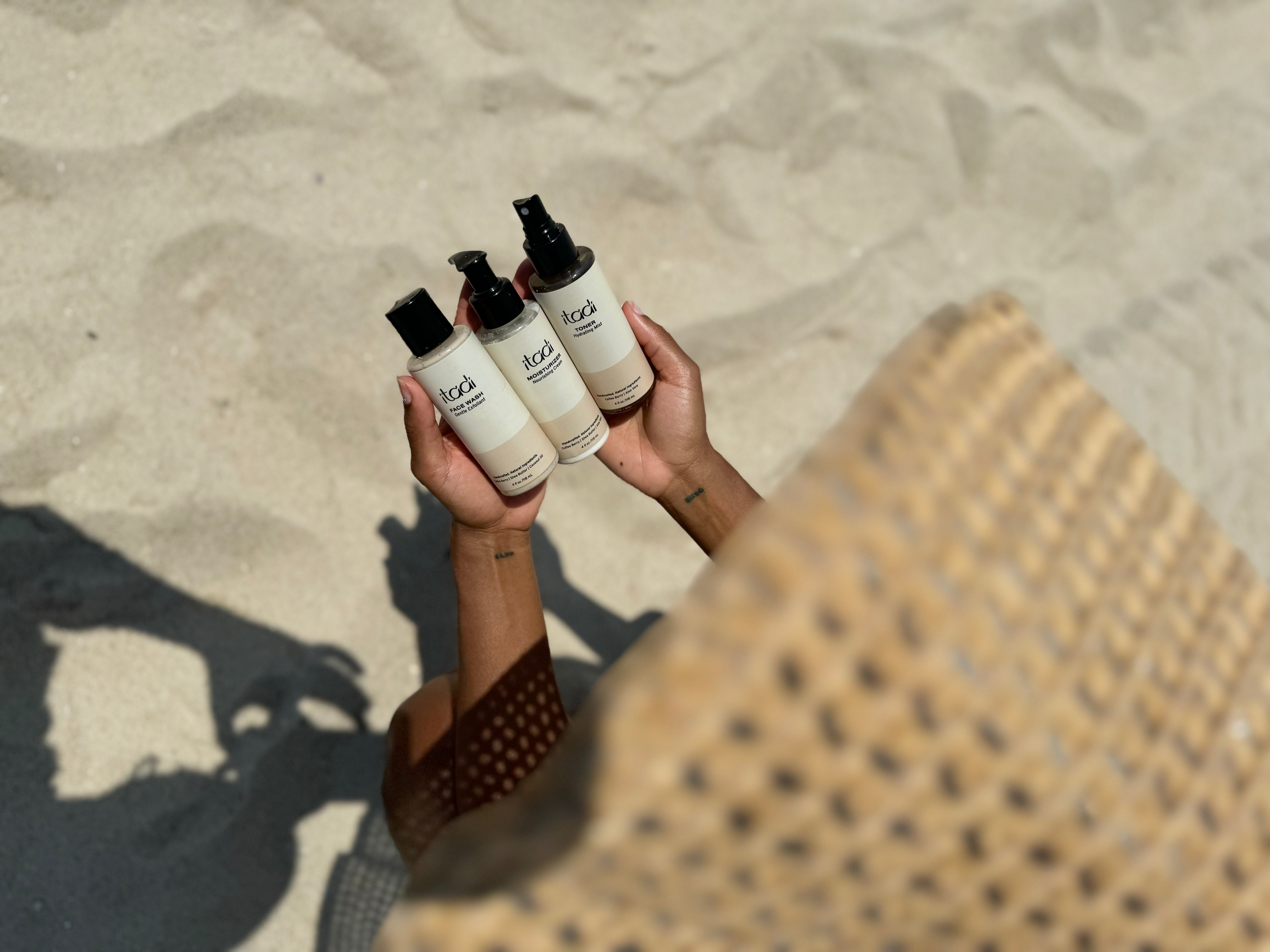
Central Market was the first time the two halves touched in public.
It took us about 1 year of trying and thankfully our broker secured our 1st major retailer. Grocery is not like selling online. Online, you can explain yourself at length; somebody reads the About page, watches a video, decides they like you. On a shelf you get a few inches and about two seconds, next to brands with budgets we do not have. All 3 products were picked up and had to work without me standing next to it.
I went to the store in Dallas in September 2024. It was in the Healthy Living aisle next to other big brands like Acure and CocoKind. The feeling of seeing it on shelf was a sense of pride and absolute amazement, which I remember better than almost anything else about that year.
Here is what got me, standing there. My father's name is on the bottle. He was a caring family man and proud African who fought for and believes in the future of Africa, and the name ITADI was his before it was a brand. A shopper in Texas picking that up knows none of it. They are reading four ounces, a price, maybe the word coffee. And that is fine — that is what a product has to be able to do. But the distance between what is on that label and what is behind it is the whole reason I keep doing this.
The farm is still a farm. We still harvest throughout the year and deal with the ups and downs of too much rain, climate change etc. The berries still go from Togo to a manufacturing warehouse in California before they go anywhere near a shelf. Nothing about it is as clean as the word "sourcing" makes it sound.
But a kid in D.C. who could not get anyone to find Togo on a map now has a reason to make people look it up. That is not a marketing line. That is the actual thing that happened, and it took 8 years.
I hope that the customers who buy our products from Central Market know that their everyday skincare has a long history and was put together with intention and care.

0 comments