
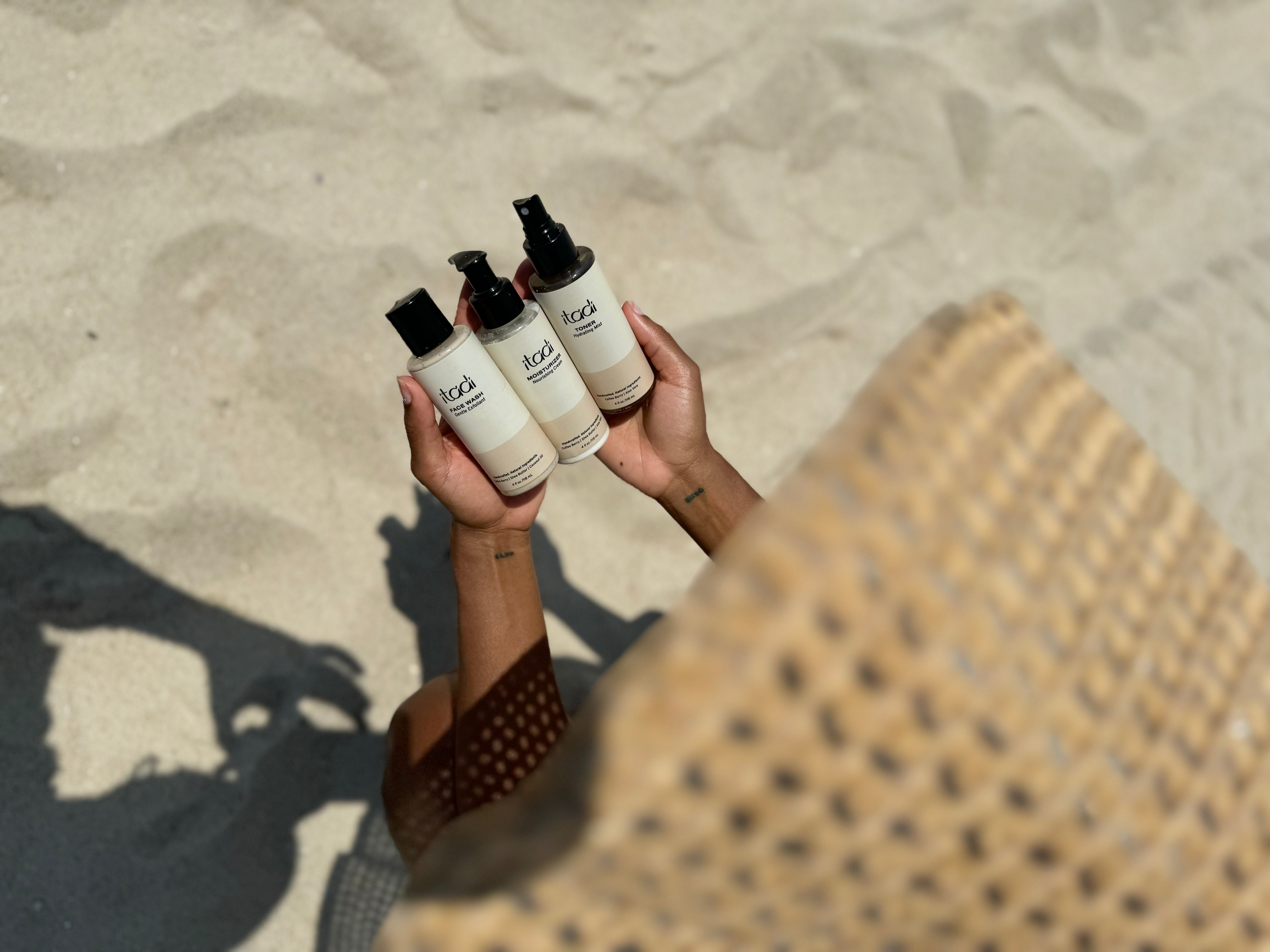
People sometimes hear that ITADI is "vertically integrated" and picture us owning every step, from seed to shelf. That isn't true, and we'd rather tell you exactly where the line is.
Here's the short version: the coffee berry in every ITADI product comes from our family's farm in Togo. The shea butter and the aloe vera do not. We buy those from outside suppliers. The rest of this post is the long version.
Where the coffee berry comes from
ITADI is named for my father, Itadi K. Bonney. Most people who know his name know it from music, the Afro-funk records he made in Togo in the 1970's. But the family's roots are in the land. We've grown coffee there since my great-grandfather started in the early 1900s.
I grew up between West Africa and Washington, D.C. I remember being on the farm as a kid with my father, mother, aunts and uncles. We visited every year throughout the years growing up. The smell of the earth, the leaves on the ground, the sound of the creek nearby.
Coffee farming creates a lot of what gets called waste. The berry is the fruit wrapped around the bean, and it usually gets stripped off during processing and thrown out. That fruit is what we use. It's the part of the harvest that wasn't going anywhere.
What we actually control
Because it's our family's farm, we know who picks the coffee, when it's harvested, and how the berries are handled once the beans come out. That's the vertically integrated part: one ingredient, from our land, handled by people we know.
What we don't control
Our cleanser, toner and moisturizer all contain shea butter and aloe vera, and we buy both from outside suppliers.
We could blur that. "Farm to face" can mean a lot of things, and plenty of labels let one farm ingredient stand in for the whole bottle. We'd rather you know that when we say the coffee berry is ours, we mean exactly that and nothing more.
Why say this at all
Because the honest version is still a good story.
And because it's the version that holds up when someone asks. All three of our products are on the shelf at Central Market in Texas now, and buyers ask where things come from. We like having an answer that doesn't need an asterisk.
What upcycling does and doesn't mean here
Upcycling means we use a byproduct of a harvest that happens anyway. It doesn't make ITADI a zero-waste company, and we won't tell you it does.
What it does mean is that fruit from the land my great-grandfather started farming ends up in something people use every morning in America, Canada and the U.K. That still means something to us.
If you ever want to know where something in our products comes from, write to us at orders@itadibody.com. We'll tell you what we know, and we'll tell you when we don't.
Tabi Bonney
0 comments