
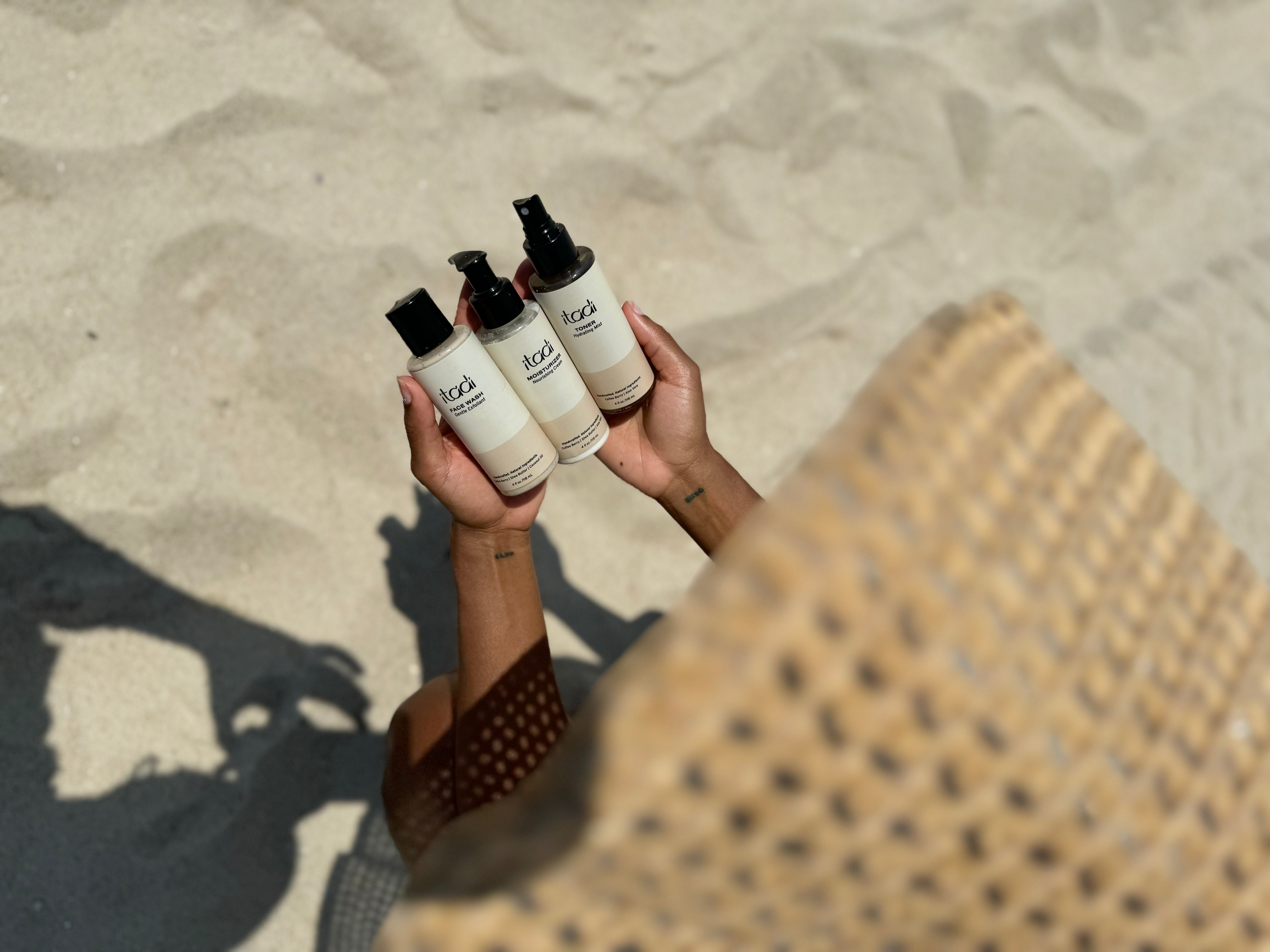
My father's name was Itadi K. Bonney. It's on every bottle we make, and I don't tell his story often enough. So here it is.
Most people who know the name know it from the music. He made Afro-funk and highlife records in Togo in the 1970s. Growing up, people would work out whose son I was and their whole face would change. At any border check in Togo, the soldiers would figure out who I was and wave us through — they were fans. Then they'd ask for a cadeau, the French word for a gift. They assumed we were rich. We were not.
But the music isn't why his name is on the bottle.
What he actually did
My father fought for the future, freedom and potential of Africa. He fought for equal rights, equal pay, and the equality of human beings. He wanted people outside Africa to see what he saw in it. Most of his music carried those messages, and that's why people loved him. If you want to hear one, start with "Watch Your Life," recorded in Togo in 1977.
He was dedicated to the land and to the people, and he told us the same thing over and over: never forget home, always come back to where you're from.
So to this day I make sure I go back home to Togo, and we built this brand with his name on it to share with the rest of the world.
The farm
Our family has grown coffee in Togo since my great-grandfather started in the early 1900s. I grew up between West Africa and Washington, D.C., and we went back every year. I remember being on the farm with my father, my mother, my aunts and uncles. The smell of the earth. The leaves on the ground. The creek you could hear before you could see it.
My father would always make sure we came to the farm to see the farmers and their families, and just sit, talk, have a meal, and then walk the limits of the land.
The thing about a coffee harvest is how much of it gets thrown away. The berry is the fruit wrapped around the bean, and it's stripped off during processing and discarded. That fruit is what goes into our products. It was already there, already grown, already on its way to nothing.
Why his name
When our family started this, we could have called it anything. We did consider other names, but nothing felt right. It wasn't until a friend said, what about your father's name — Itadi? That's when everything clicked.
We called it ITADI because the whole thing only makes sense as something that came from him. The land is his family's land. The habit of going back every year was his. The idea that you don't throw away a good thing just because someone told you it was waste.
My father would bring over clothes, electronics and cars that were considered done or no longer usable in America and give them to people in our village. We'd watch things get repaired. There are clothes still being worn today that would have been discarded 20 years ago.
I believe that if my father was around today he would be proud to see what we've done with the land, and that something from it is on shelves here in the U.S. I'm sure he would say "You see!" with a big smile on his face.
What that costs us, honestly
Naming a skincare brand after a man most Americans have never heard of is not a marketing decision. It doesn't help anyone find us. Nobody searches for "Itadi" unless they already know.
We did it anyway, and we'd do it again. It was his name long before it was a brand.
Where you can hear him

*Itadi's first album
Our cleanser is on the shelf at Central Market in Texas now, in all of their stores. Somebody in Dallas is going to pick up a bottle this week with his name on it and not know a thing about him. That's fine. It's still his name, and the fruit inside it still comes off his family's land.
If you want to know anything about where our ingredients come from, write to us at orders@itadibody.com. Same as always — we'll tell you what we know, and tell you when we don't.
Tabi Bonney
0 comments