
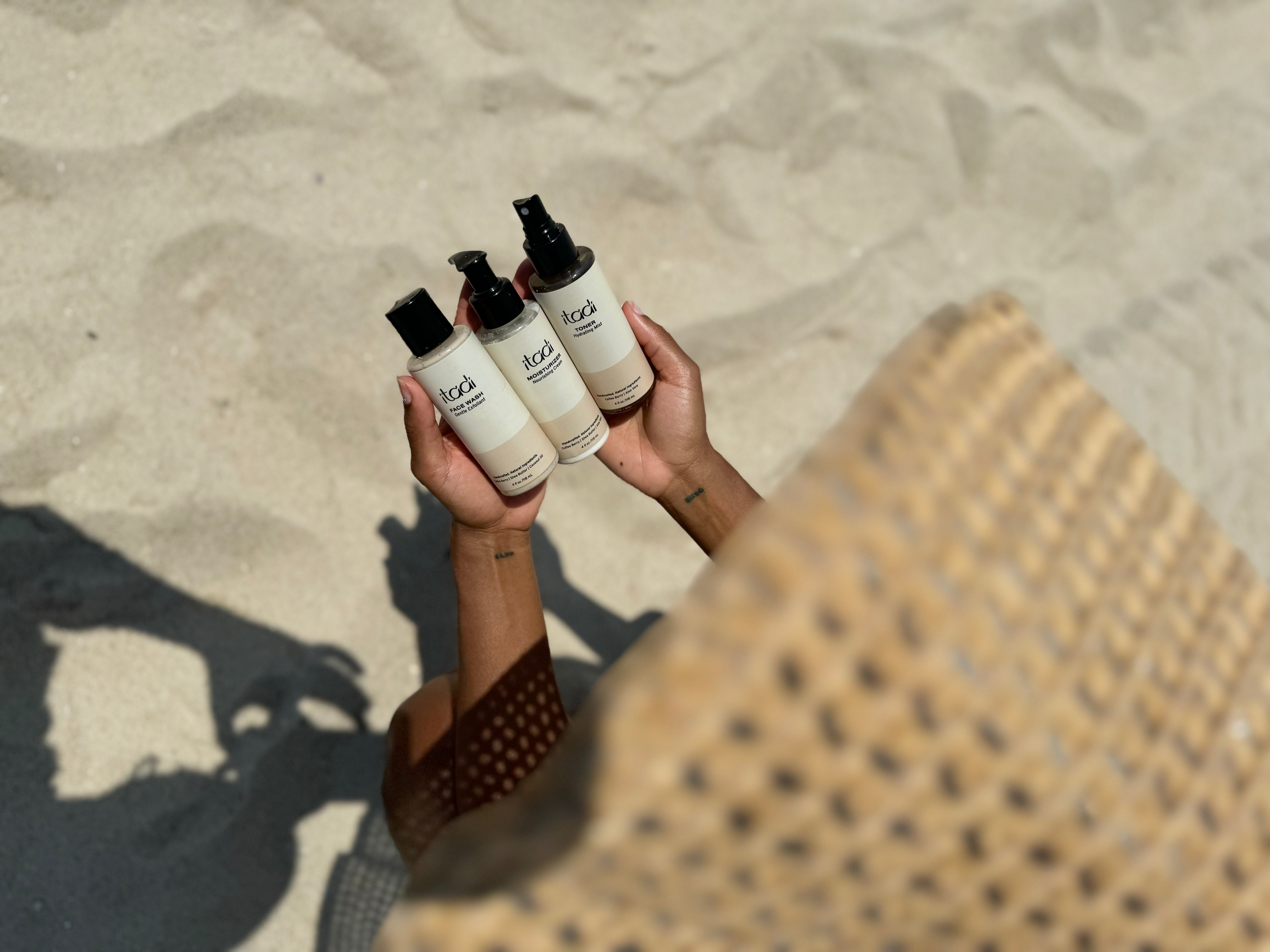
Exfoliation is the process of removing dead skin cells from the surface of your skin. It's a crucial step for achieving a brighter, smoother complexion, preventing clogged pores, and allowing your other skincare products to penetrate more effectively. However, over-exfoliation can damage your skin barrier, so understanding how and when to do it is key.
Why Exfoliate?
Our skin naturally sheds dead cells, but sometimes this process slows down, leading to:
•Dullness: A buildup of dead cells can make your skin look tired and lacklustre.
•Clogged Pores: Dead cells can mix with oil and get trapped in pores, leading to blackheads and breakouts.
•Uneven Texture: Rough patches and bumps can be smoothed away with regular exfoliation.
•Poor Product Absorption: Active ingredients can't work their magic if they can't get past a layer of dead skin.
Types of Exfoliation: Physical vs. Chemical
1. Physical Exfoliation
This involves using a granular scrub or a tool (like a brush or konjac sponge) to manually buff away dead skin cells.
•How it Works: Friction physically removes dead cells.
•Pros: Immediate smoothness, satisfying feeling.
•Cons: Can be harsh if done too aggressively, leading to micro-tears or irritation. Avoid scrubs with large, irregular particles (like crushed nut shells).
•When to Use: 1-2 times a week, gently. For a gentle physical exfoliation that also cleanses, consider a product like the Itadi Face Wash Gentle Exfoliant, which uses fine, natural particles to buff away dead skin cells without being overly abrasive, leaving your skin smooth and refreshed.
2. Chemical Exfoliation
This uses acids to dissolve the bonds between dead skin cells, allowing them to shed naturally.
•How it Works: Acids (AHAs, BHAs, PHAs) gently loosen dead skin cells.
•Pros: More even exfoliation, less risk of physical damage, can address specific concerns (e.g., AHAs for surface texture, BHAs for clogged pores).
•Cons: Can cause initial purging or sensitivity if introduced too quickly. Requires sun protection.
•Key Ingredients:
•AHAs (Alpha Hydroxy Acids): Glycolic Acid, Lactic Acid. Work on the skin's surface, great for texture and brightness.
•BHAs (Beta Hydroxy Acids): Salicylic Acid. Oil-soluble, penetrates pores, great for acne and blackheads.
•PHAs (Polyhydroxy Acids): Gluconolactone, Lactobionic Acid. Milder than AHAs, suitable for sensitive skin.
•When to Use: Start 1-2 times a week, gradually increasing frequency as your skin tolerates it. Always follow with moisturizer and sunscreen.
The Simple Truth
Exfoliation is beneficial, but balance is key. Listen to your skin, choose the right type for your concerns, and never overdo it. A well-exfoliated skin is a happy, glowing skin.
0 comments