
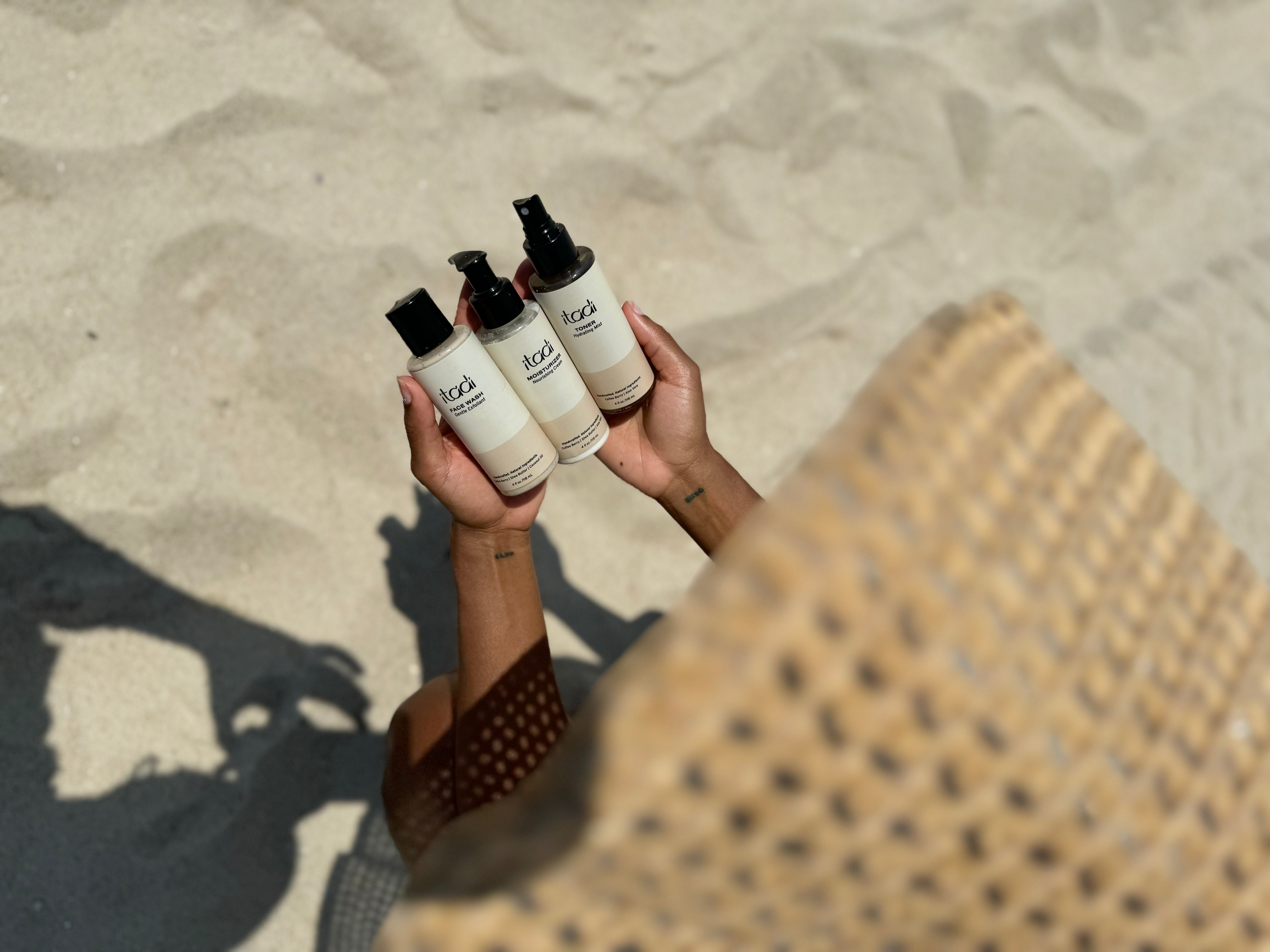
Welcome to the Itadibody blog! You've just bought an exciting new skincare product, and you're eager to try it. But wait! Before you slather it all over your face, there's a crucial step that can save you from potential irritation, redness, or breakouts: patch testing. This simple technique is your skin's best friend, especially if you have sensitive skin or are prone to reactions. Let's learn why and how to patch test like a pro.
What is Patch Testing?
Patch testing involves applying a small amount of a new skincare product to a discreet area of your skin and observing it for a period to see if any adverse reaction occurs. It's like a mini-trial for your skin, helping you determine if a product is compatible with your unique skin before you commit to using it on your entire face.
Why is Patch Testing So Important?
Your skin is a complex organ, and it can react differently to various ingredients. Here's why patch testing is a non-negotiable step for beginners:
1. Identify Irritants and Allergens
Many ingredients, even natural ones, can cause irritation or an allergic reaction in some individuals. Over 15,000 substances are known to cause allergic skin reactions, and personal care products are a common culprit. Patch testing helps you pinpoint these problematic ingredients before they cause widespread issues.
2. Prevent Widespread Breakouts or Redness
Imagine trying a new product all over your face only to wake up with a rash or a breakout. Patch testing helps you avoid this scenario by confining any potential reaction to a small, less noticeable area.
3. Save Time and Money
By identifying incompatible products early, you save yourself the time and effort of dealing with a skin reaction, and you avoid wasting money on products you can't use.
4. Delayed Reactions are Real
Some reactions, particularly allergic contact dermatitis, can be delayed, appearing days after exposure. A proper patch test accounts for this by requiring observation over several days.
How to Perform a Patch Test: A Simple Guide
The American Academy of Dermatology (AAD) recommends these steps for effective patch testing:
1.Choose a Discreet Test Spot: Select a small area of skin that won't be easily rubbed or washed away. Good options include the inside of your forearm, behind your ear, or a small patch on your jawline. These areas are also less visible if a reaction does occur.
2.Apply a Small Amount: Apply a quarter-sized amount of the new product to your chosen test spot. Apply it as thickly as you would if you were using it regularly on your face.
3.Leave it On:
•For leave-on products (serums, moisturizers, treatments): Leave the product on the test spot for at least 24-48 hours, or even up to 7-10 days, reapplying daily as you would in your routine. Remember, some reactions are delayed.
•For wash-off products (cleansers, masks): Apply the product to the test spot and leave it on for 5 minutes, or as long as the product instructions advise, before rinsing it off.
4.Observe for Reactions: During the testing period, regularly check the patch for any signs of redness, itching, burning, stinging, swelling, or breakouts. Take note of how your skin feels.
5.If a Reaction Occurs: Immediately wash off the product from the test area. Stop using the product. You can apply a cool compress or petroleum jelly to soothe the irritated skin if needed.
The Takeaway
Patch testing is a small step that can make a huge difference in your skincare journey. It empowers you to introduce new products safely and confidently, ensuring that your routine is building towards healthy, happy skin, not frustrating reactions. Make it a habit, and your skin will thank you!
0 comments