
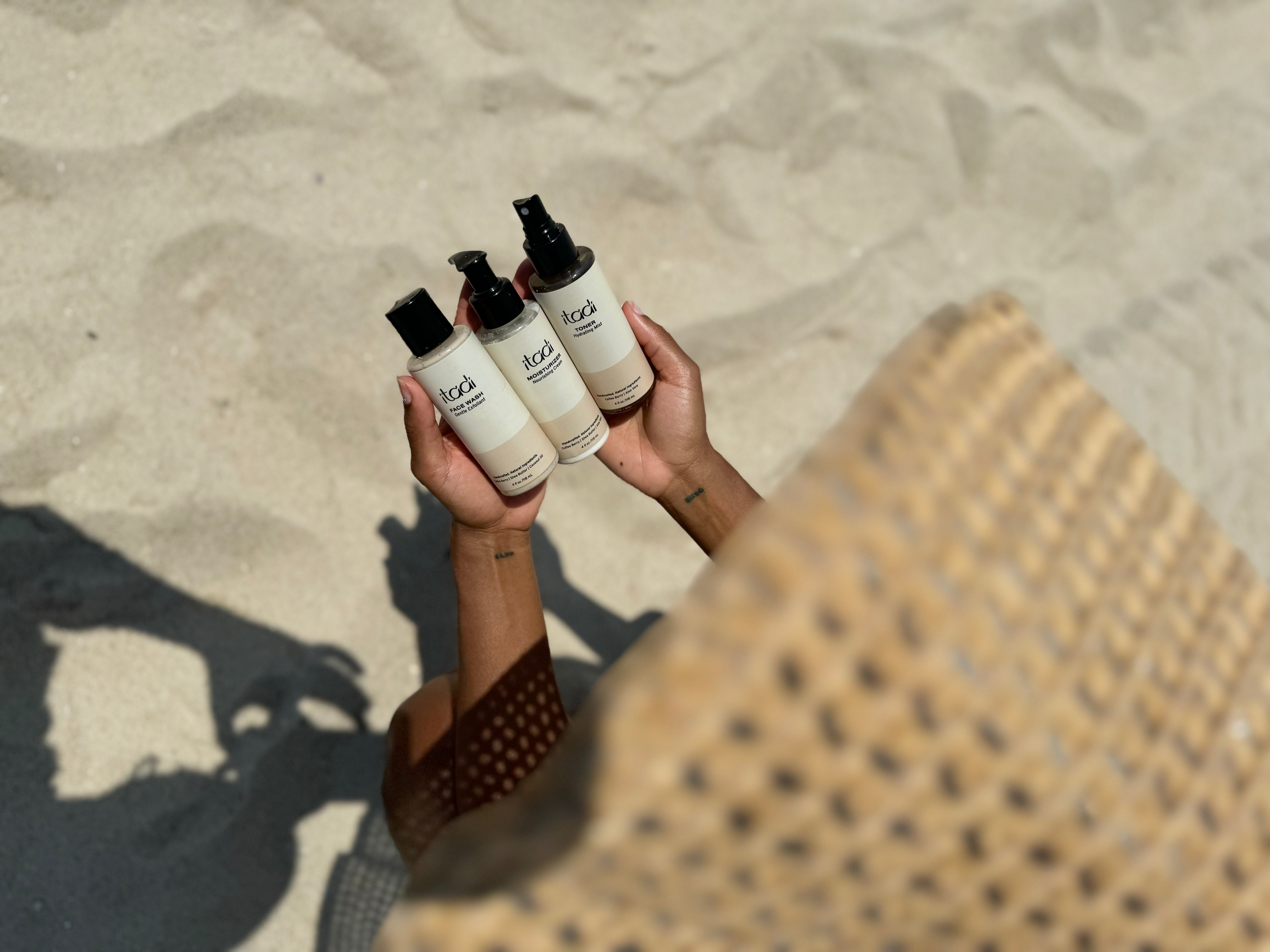
The short answer: the American Academy of Dermatology recommends applying a new product to a small patch of skin — about the size of a quarter — and waiting 7 to 10 days before putting it on your face. If nothing happens in that window, it is very likely fine for you.
That is the rule. The rest of this is why the number is what it is, how to run the test so it actually tells you something, and what we have learned making skincare for people whose skin reacts to almost everything.
Why 7 to 10 days, and not 24 hours
Most people who patch test do it overnight and call it done. That catches one kind of reaction and misses the other.
Irritation is fast. Stinging, redness, a hot feeling — usually within minutes to a day. That is your skin barrier objecting, and it is generally a concentration problem rather than an ingredient problem.
Allergic reactions are slow. Your immune system has to recognize the ingredient before it can react to it, and building that recognition takes time. The first exposure can do nothing at all. The reaction turns up on day four, or day seven — often only after you have already worked the product into your daily routine.
That is the entire reason for the longer window. A 24-hour test tells you whether something stings. A 7-to-10-day test tells you whether your body has a problem with it.
How to run the test properly
- Pick the right spot. Inner forearm, or just behind the ear along the jawline. Behind the ear is closer to facial skin in thickness and oil production, so it gives the truer read for a face product. The forearm is easier to keep an eye on.
- Use the amount you would actually use. A thin layer over a quarter-sized area. You are testing normal use, not worst case.
- Reapply the way you would in real life. A twice-daily moisturizer, twice daily. A weekly mask, weekly. One application does not simulate anything.
- Then leave it alone and watch. Redness, itching, bumps, flaking, burning or rash means stop. Nothing at all after 7 to 10 days means go ahead.
- Test one product at a time. If you are changing your whole routine at once and something reacts, you have learned nothing about which product did it.
The part most brands will not tell you
“Natural” and “plant-based” do not mean non-reactive. We say that as a plant-based brand.
Some of the most common contact allergens in cosmetics are botanical. Essential oils, citrus extracts, plant fragrance compounds — lavender, tea tree, ylang-ylang, limonene, linalool. All plant-derived, all well documented as triggers for some people. A product can be organic, cold-pressed and sustainably harvested and still be the thing that makes your face react.
The reverse holds too. Plenty of synthetic ingredients are extremely well tolerated. “Clean” is a marketing category, not a safety rating.
So the honest advice is to patch test everything, including anything labelled gentle. Including ours.
What to look for on a label
- How fragrance is disclosed. “Fragrance,” “parfum” and “natural scent” can each stand in for a blend of dozens of components you cannot see. That is not automatically bad — but it does mean that if you react, you will never know to what.
- Where essential oils sit in the list. Ingredients appear in order of concentration. An essential oil near the top is present in a meaningful amount.
- How long the list is. Fewer ingredients means fewer variables when something goes wrong.
About our own labels
Our ingredient lists end with “Natural Scent,” and we should be straight about what that means. It is a blend we buy from a supplier, and the exact composition belongs to them, not us — the same confidentiality any brand working with a fragrance house operates under. We chose that supplier because their standards were the strictest we found. But we are aware that “trust us” is exactly what we just told you not to accept.
So here is the practical answer instead. If you know you react to fragrance, patch test ours for the full ten days, same as anything else. We would rather you find out on your forearm than take our word for it.
How we learned to do this
We did not work it out alone. When we were developing ITADI, we had the guidance of Alaffia — a brand more than twenty-five years into this business, rooted in Togo the way our family is, and building from the United States the way we are.
A lot of what we understand about which botanicals are worth including, and which ones cause more trouble than they are worth, came from those conversations. Twenty-five years of watching how real skin responds to real formulations is not something you can shortcut.
One more thing, from experience
A customer came to us certain that one of our products was breaking them out. We went back and forth about it — when it started, what else was in their routine — and it turned out they were layering another brand’s product over ours. They dropped the other one, kept ours, and it settled down.
We tell that story because it is the most common way a patch test gets wasted. They had done nothing wrong except change two things at once, which made it impossible to know which one was responsible. Test one product at a time. Then add the next one, and wait again.
Reactions to our products are rare in what we hear back from customers. Rare is not never, which is the whole reason this post exists.
The short version
Small area. The amount you would really use. Seven to ten days. One product at a time. If nothing happens, you are clear — and if something does, you found out on a patch of forearm instead of your whole face.
0 comments